
Surviving The Gig: Part One Of Three
Summer is always the busiest time of year for working musicians. Weddings, jazz gigs, and original projects, it’s not uncommon for me to be involved in several bands at once. Each with completely different musical demands. Over the past few months alone, I’ve been juggling hundreds of songs across multiple styles. Pop, funk, soul, jazz standards, metal originals - Sometimes all in the same week.
So how do you actually learn, retain, and perform that much music to a high standard without constantly feeling behind? Below are the approaches I rely on to produce a quality performance and ultimately keep things fun.
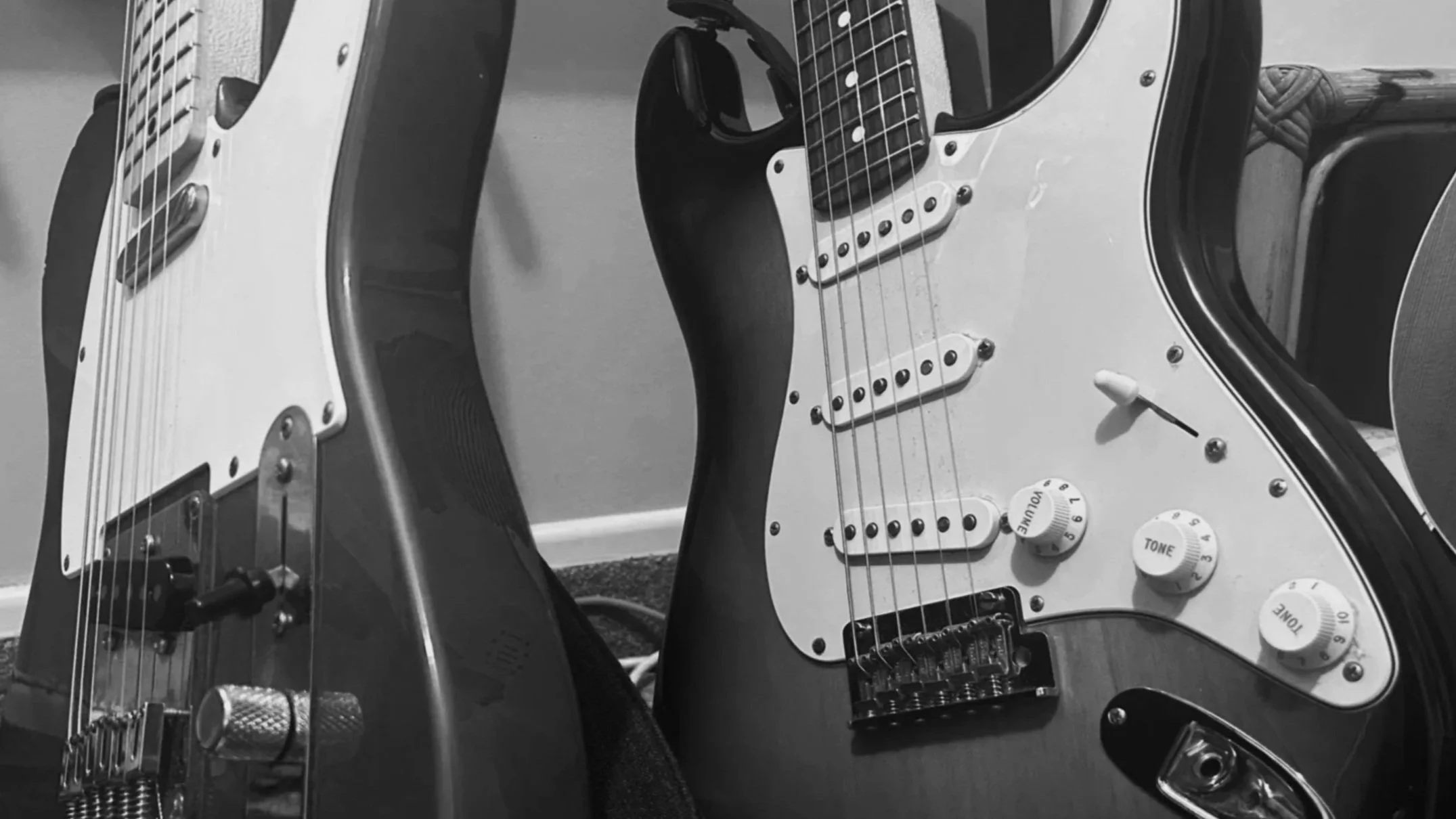
Immersion Is Everything: Learning Large Wedding Band Sets
A big summer commitment is playing with a wedding and functions band called Hush Hush. This season alone, that’s meant learning around 40 new songs, many of them pop and funk hits that audiences know inside and out. This is a demanding band to play in, making sure the chord voicings, articulations, and tone are 100% authentic. With back-up vocals being spot on.
My starting point is always immersion. Listen, listen, listen! (What was that, sorry?)
I build Apple Music playlists containing the full setlist (or any new additions), sometimes 15–20 songs at a time. For weeks, those playlists are on heavy rotation: walking, driving, commuting, cooking - any spare moment I can find. Passive listening is incredibly powerful. Without picking up the guitar, I’m beginning to internalise:
Song forms
Key modulations
Signature rhythms and hits
Vocal phrasing and background vocal moments
By the time I pick up the instrument, the song already feels quite familiar.
Listening With Intent: Going Beyond Passive Familiarity
Once a song is “in my ear” I can get behind the guitar and start to hone in on the details.
What exactly is the guitar doing? Is it a syncopated funk rhythm but with constant 16th dead notes?
Is the rhythm locked to the kick, the hi-hat, or the bass? Maybe even hits with the horn section?
Where do the backing vocals sit rhythmically?
This step is about understanding roles. While not always true - In pop and RnB music the guitar is rarely the focal point, and often a case of “If it wasn’t there, then you’d notice!”
Case Study: “I Wanna Dance With Somebody”
Whitney Houston’s “I Wanna Dance With Somebody” is one of my favourite tunes to play in the Hush Hush set, and is a great example of a song that demands precision to feel right. It’s a deceptively intricate song with an iconic guitar hook in the chorus, and an interesting arrangement with lots of cool hits, variations and key changes throughout. This song lives or dies on groove and energy. If the guitar part is too stiff, it loses its bounce immediately.
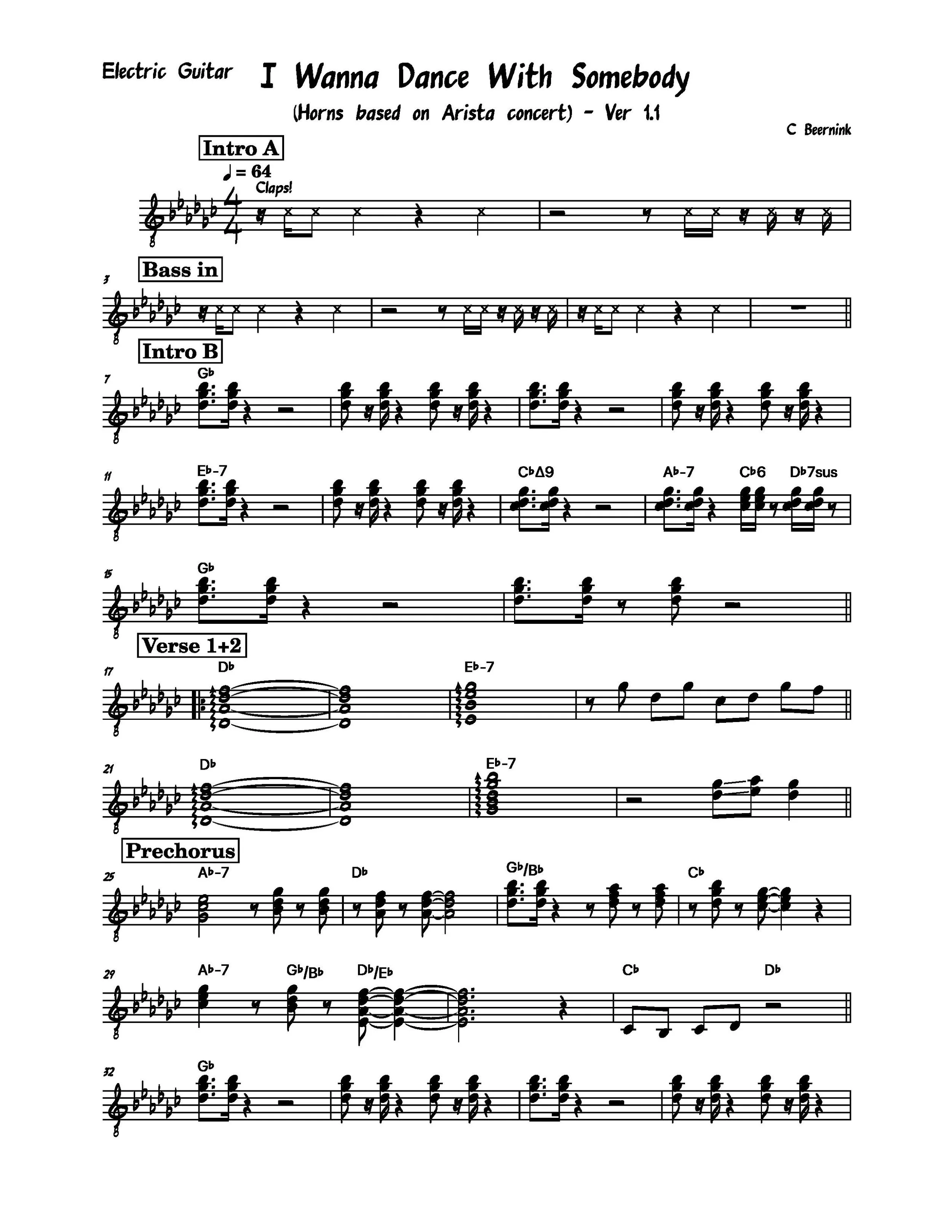
While focused listening does much of the heavy work, charts are useful for road mapping and taking notes. Keeping structure, cues, and hits clear so everyone stays locked in.
Below is the first page of the chart I use with Hush Hush transcribed by band leader, Chris Beernink:
Recreating Guitar Parts Authentically
For this tune, the guitar part is all about syncopation and restraint. The temptation is to overplay, but the original part leaves space and leans heavily on rhythmic placement.
Loop sections of the recording
Play along until my part “feels” right in the mix. Groove and dynamics
Focus on muting, note length, and attack. Not just rhythm
I’ll also build a dedicated patch on my Line 6 Helix, matching the original tone as closely as possible. Tone-sculpting forces repetition, and repetition forces accuracy.
Matching the tone also helps the band as a whole. If my guitar sits correctly in the mix, everyone else can play more confidently.
Backing Vocals & Guitar
The most challenging part of “I Wanna Dance With Somebody” is playing the juxtaposed rhythms of the guitar parts and backing vocals together. The backing vocals are rhythmically specific, while the guitar part is heavily syncopated and together they require real coordination.
My approach:
Sing my backing vocal part to the recording
Play the guitar part alone, to a metronome to hone the rhythm and create isolation
Tap quarter note time in one hand, with the rhythm of the guitar in the other. Visa versa for the vocal rhythm
Put them together slowly
If something falls apart, I’ll drill just that moment. When layering complex backing vocals over a rhythmically intricate guitar part, the key is identifying how each syllable aligns with the guitar's strong beats and syncopated accents.
Having these internalised leaves mental space to pay attention to the bandleader, the crowd, and the energy in the room!
Preparation Creates Freedom on Stage
Listening, tone-sculpting, and isolating tricky moments creates freedom. When the song is fully internalised, I’m not thinking about chords, what’s coming next or lyrics on stage. The better prepared you are, the more present you can be.
In the next part of this series, I’ll dive into how this process shifts when moving to jazz sets, and how I keep my brain from melting!
